
A sports tech product design consultant is a specialist who partners with founders and product leaders to architect and design digital products for the sports industry. Their role combines deep industry knowledge with expertise in user experience (UX), product strategy, and interface design to turn ambitious ideas into market-ready products.
Unlike a generalist designer, a specialist in sports tech understands the unique and complex world of fans, athletes, coaches, and high-stakes industries like betting. They don’t just create beautiful screens; they build strategic assets that are designed to succeed in a highly competitive market.
Key Responsibilities
While every project is unique, the core responsibilities of a sports tech product design consultant focus on bridging the gap between a business goal and a high-quality user experience.
Strategic Advising
A consultant’s primary role is to provide “big-picture” expertise. I partner with clients on strategic decisions to define the product vision, prioritize features for an MVP, and create a roadmap for future growth. The goal is to ensure the product is not only well-designed but also well-positioned to win in the market.
User Research & Discovery
To build a successful product, you have to deeply understand your users. I conduct research to uncover key insights about the behaviours and needs of the target audience. Whether they’re casual fans, professional coaches, or seasoned bettors. This data-driven approach ensures the final product solves real-world problems.
UX/UI Design
This is the process of turning strategy into a tangible product. I handle the entire design lifecycle, including:
- Information Architecture: Structuring the app in a logical and intuitive way.
- User Flows & Wireframes: Mapping out every user journey and creating the low-fidelity blueprints for the product.
- High-Fidelity Visual Design: Crafting the polished, pixel-perfect final user interface (UI) that users will interact with.
System Architecture
I don’t just design screens; I architect scalable systems. A key deliverable is often a comprehensive design system or UI toolkit. This empowers internal teams to build new features with speed and consistency. I also create high-fidelity, interactive prototypes that allow us to validate the user experience and secure stakeholder buy-in before committing to costly development.
Examples of Work in Practice
The best way to understand the role is to see it in action. Here are a few examples from my own work that illustrate the different challenges a sports tech product design consultant solves.
Example: Architecting a Fan Ecosystem
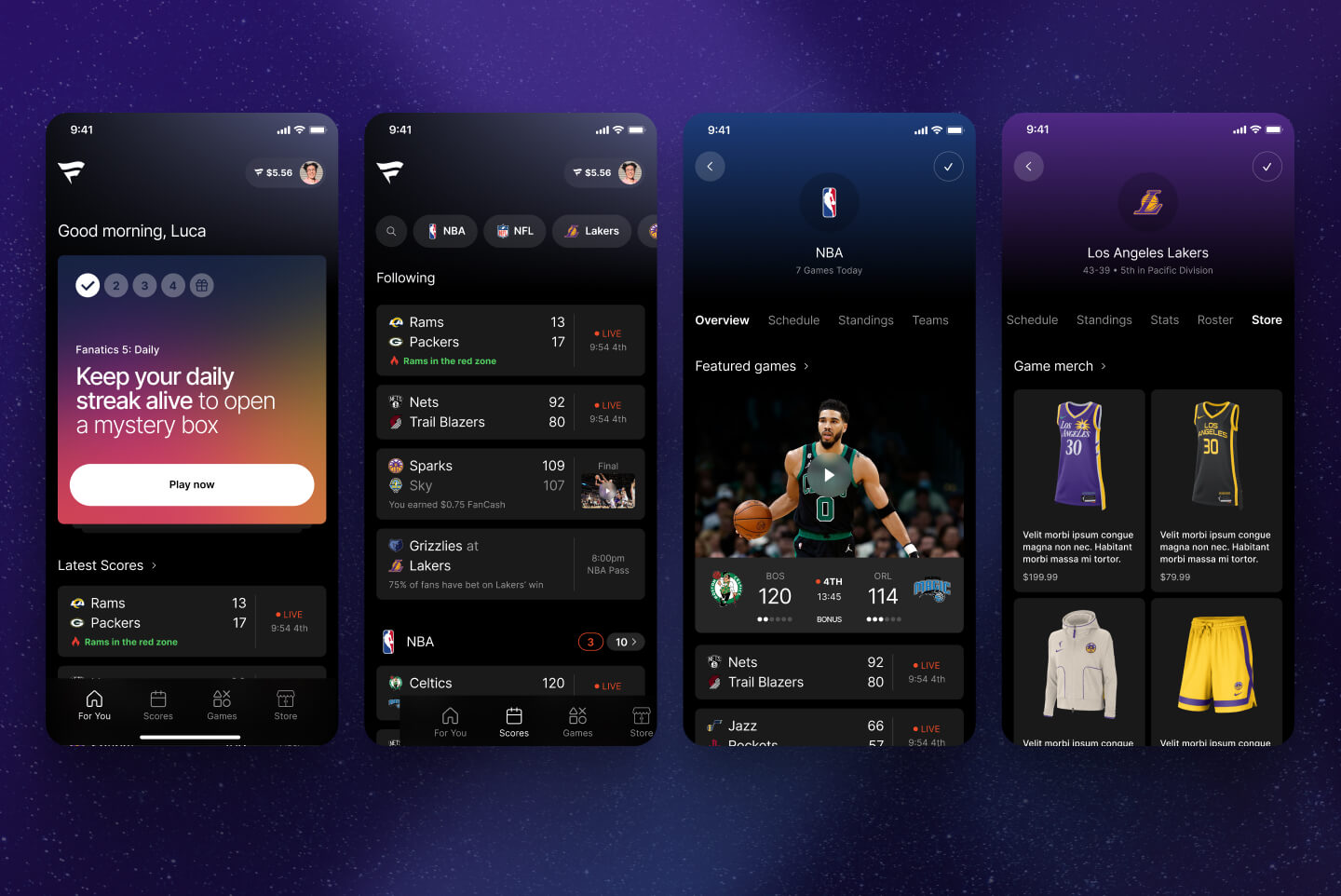
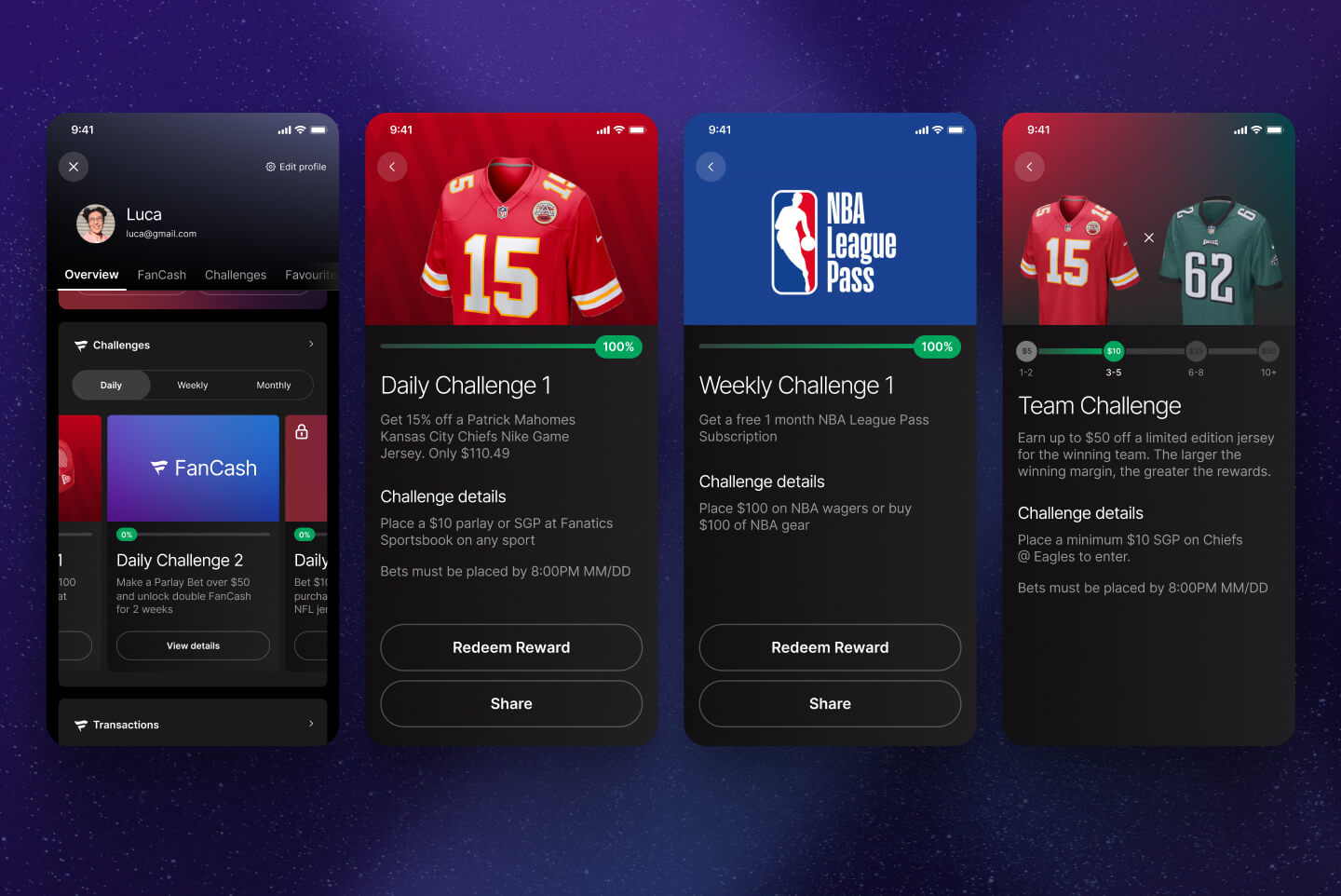
A common challenge for large sports brands is unifying their many offerings like scores, news, commerce, and loyalty into a single, cohesive app. This involves designing a complex information architecture that feels simple to the user.
Example: Building a Product from a Blank Page
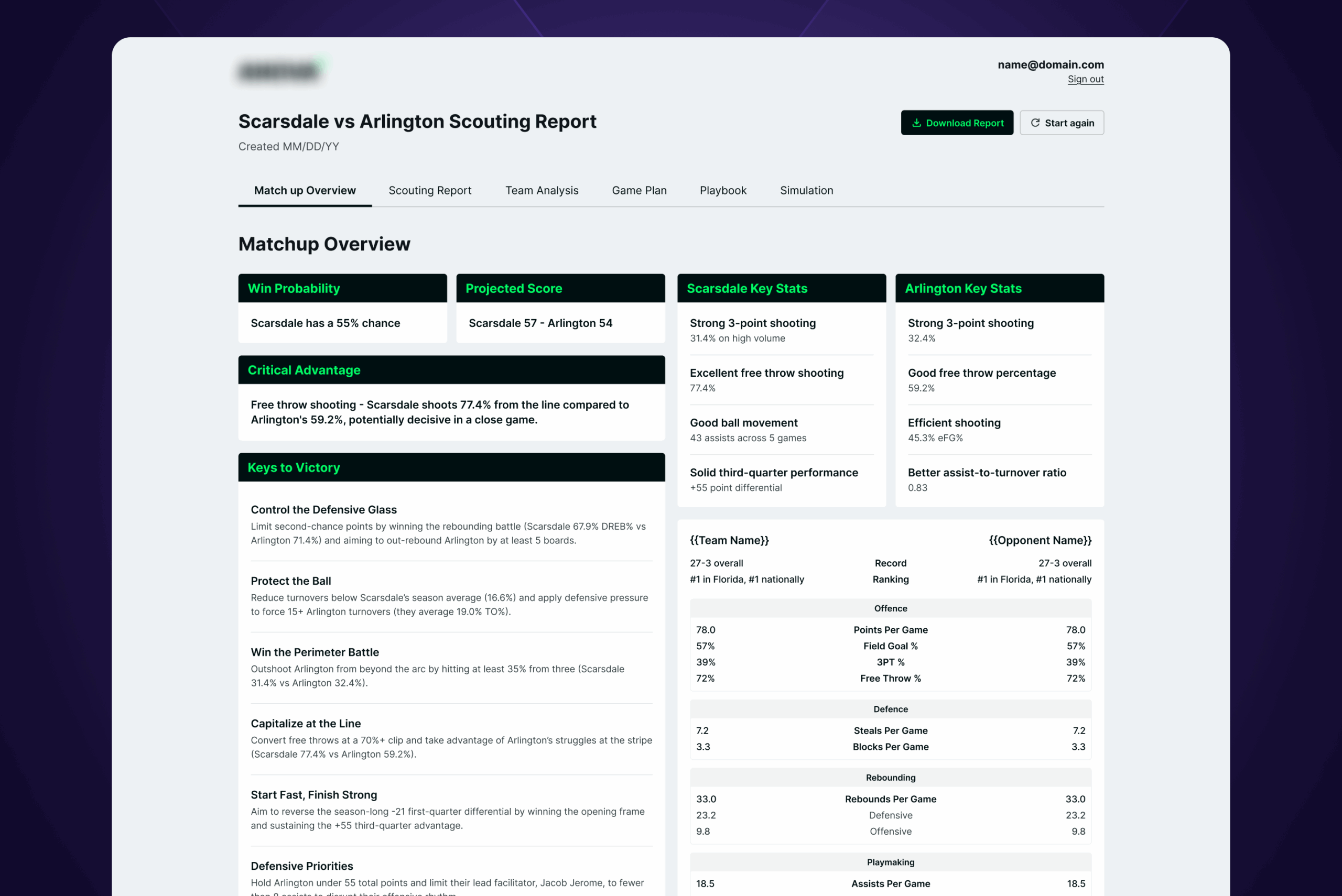
Many great sports tech products start with a founder’s vision but no tangible design. A consultant’s role is to take that raw idea and create a complete, investor ready product blueprint from scratch.
Example: Designing a Foundational MVP
For an early stage startup, speed to market is everything. A consultant is often brought in to translate a detailed business brief into a visually compelling and buildable Minimum Viable Product (MVP) to attract investors and users.
Why Hire a Specialist Consultant?
Founders and product leaders choose to partner with a specialist consultant for three key reasons: speed, expertise, and a focus on business outcomes.
Speed to Vision: An experienced consultant can take a complex idea and rapidly translate it into a tangible product vision, saving months of internal discovery and de-risking the entire project.
Deep Domain Knowledge: A specialist in sports tech already understands the competitive landscape, the unique psychology of a fan or bettor, and the technical challenges. They don’t need to spend your budget getting up to speed on your industry.
A Focus on ROI: An independent consultant is singularly focused on solving your business problem. The goal isn’t just to deliver screens; it’s to deliver a strategic asset that increases engagement, drives revenue, and provides a tangible return on your investment.