

The Challenge: Bridging Vision and Reality
Fanatics came to me with a bold vision and early-stage concepts from a global design agency. But there was a significant gap between those initial ideas and a real-world, buildable product. They needed someone to bridge that gap by taking an ambitious vision for the world’s #1 sports app and architecting the detailed, user-centric foundation that would actually get built.
The goal was creating a single destination that seamlessly integrated scores, news, commerce, betting, loyalty, and collectibles. This wasn’t about creating pretty screens. It was about solving a fundamental UX challenge: how do you unify five different product experiences without overwhelming the user?
My Role: Lead Product Designer & UX Architect
I was brought in to architect the user experience. My responsibility was defining the information architecture, designing end-to-end user flows for all core features, and creating a cohesive, scalable design system that internal teams could adopt and expand.
The process followed the same sportsbook UX design and data visualisation design principles I apply to simplify complex, high-volume digital environments.
Part 1: The Foundation
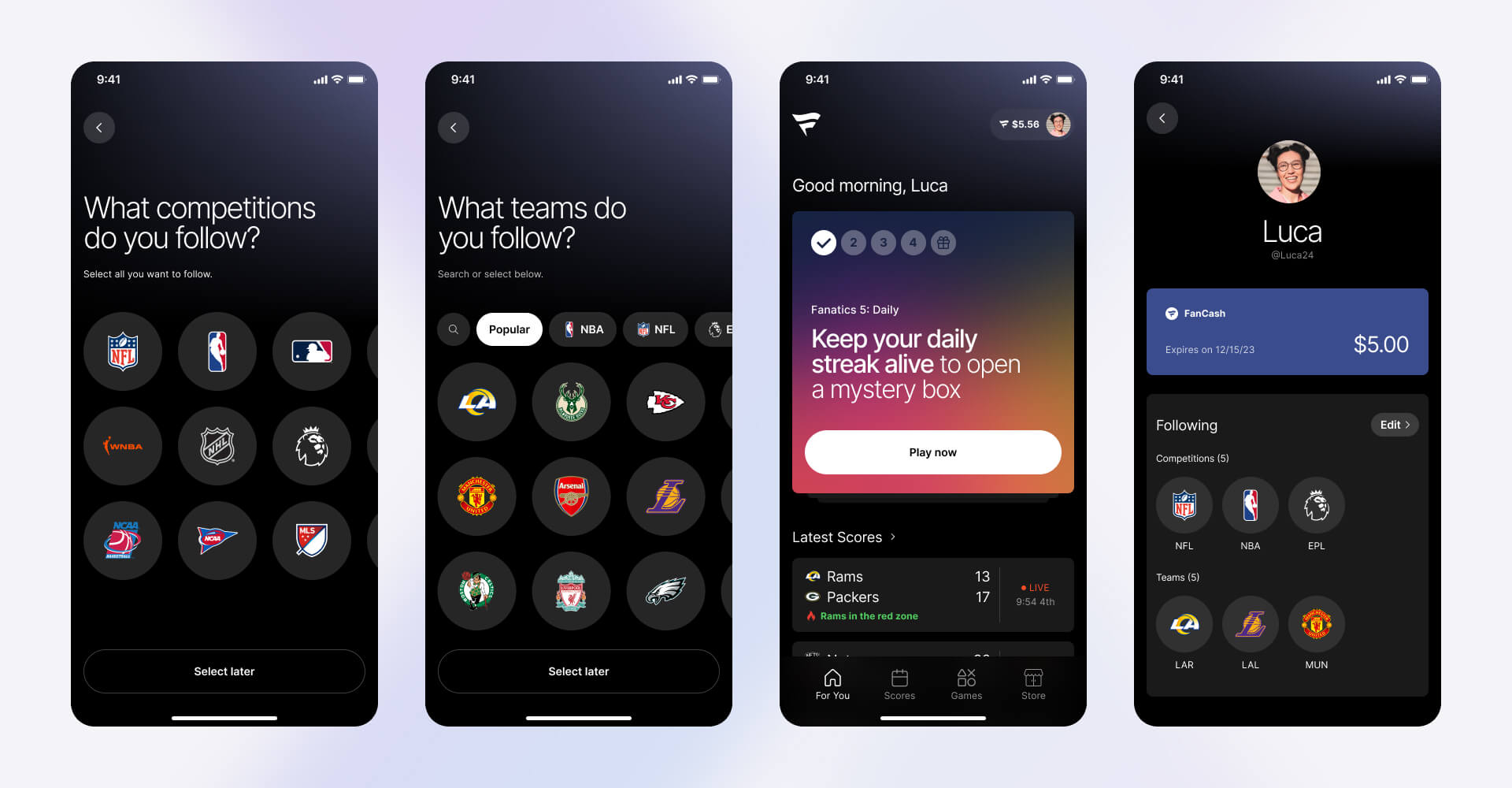
1. The Personalized Experience
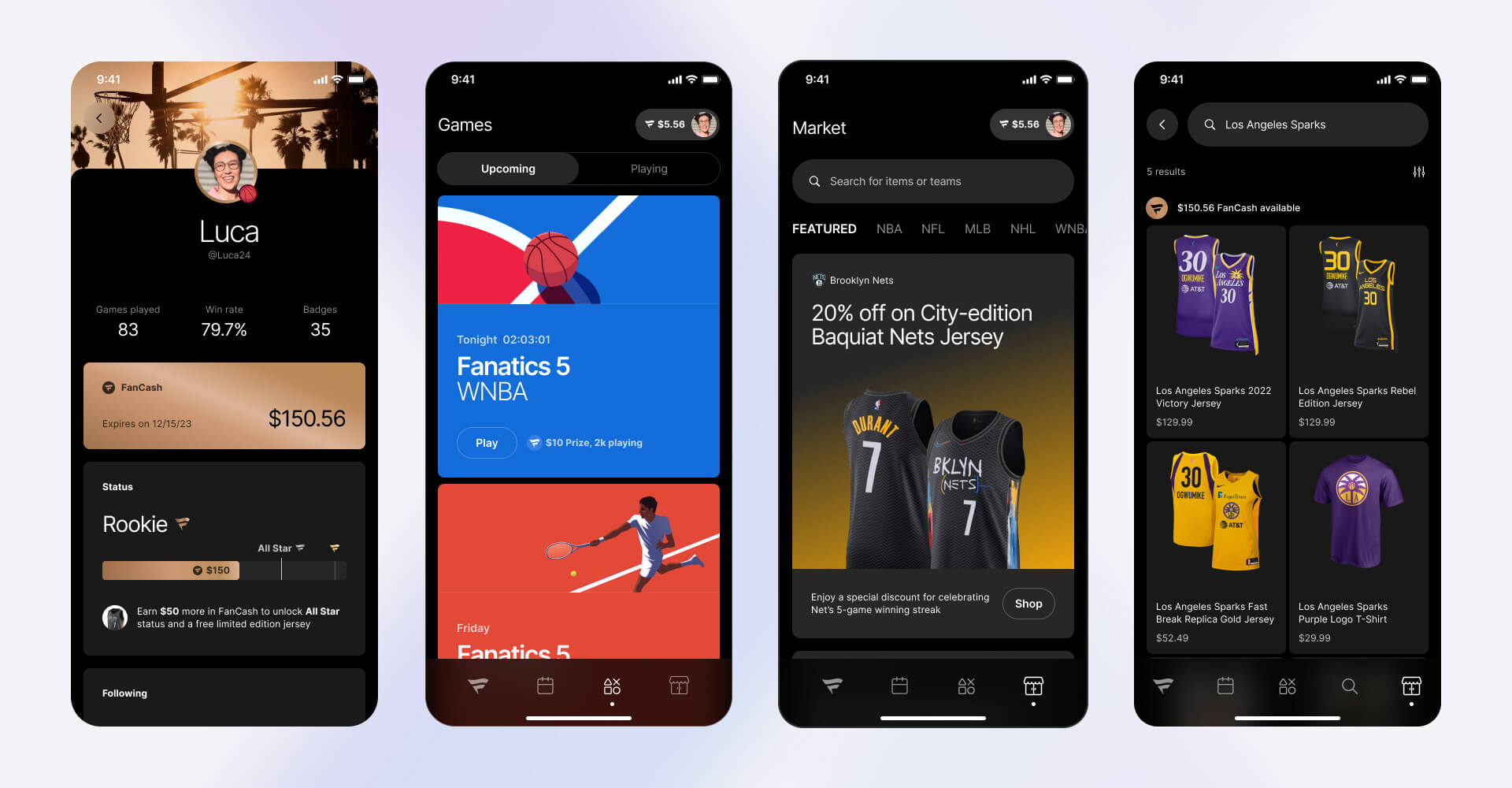
The personalised onboarding flow I designed captures favourite leagues, teams, and players, which directly powers this feed. Every user gets a unique experience from day one.
2. The Definitive Score & Content Hub
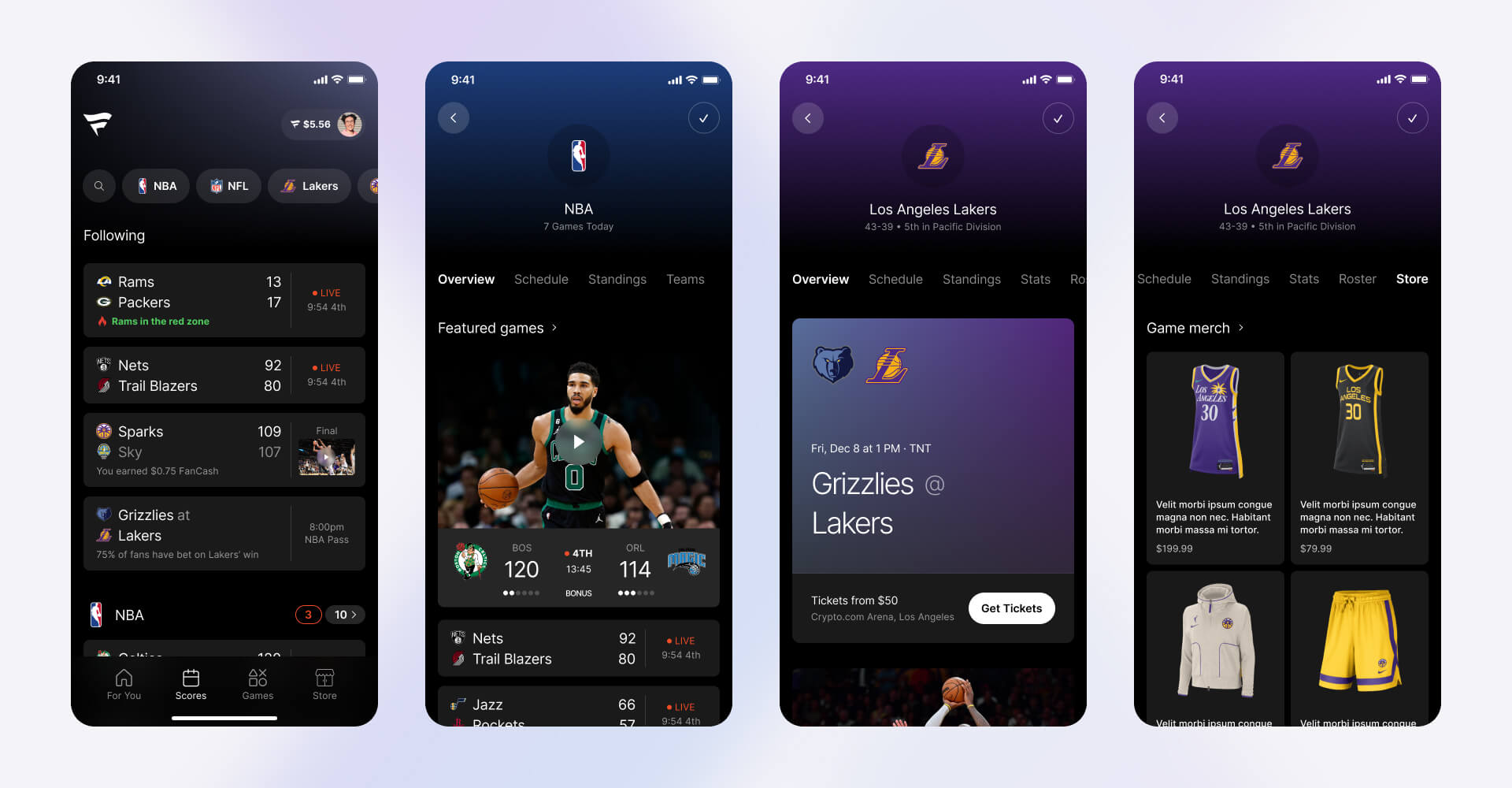
I designed a comprehensive system for team and league pages as hubs for schedules, stats, rosters, and merchandise. The Score Centre was designed as the heart of the live experience, allowing users to effortlessly follow multiple games from pre-game analysis through live play-by-play into post-game breakdowns.
3. In-Depth, Multi-Stage Event Coverage
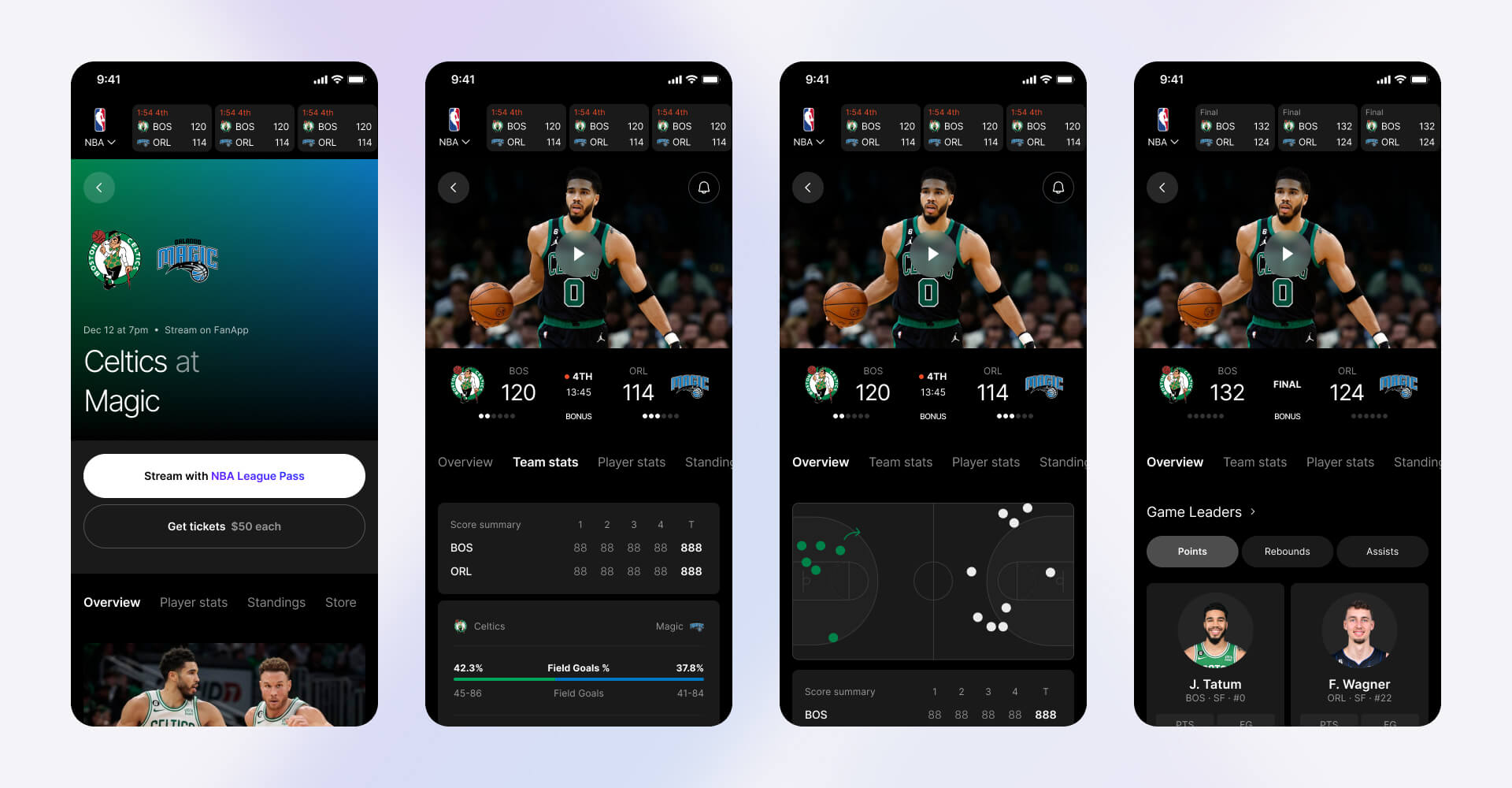
Beyond a simple score, fans want to immerse themselves in the game. I designed a detailed, multi-stage event view that adapted to the user’s context. This included pre-game stats and insights, a rich live-game experience with multiple viewing options, and a post-game view for reliving key moments.
4. A Deeply Integrated Loyalty System
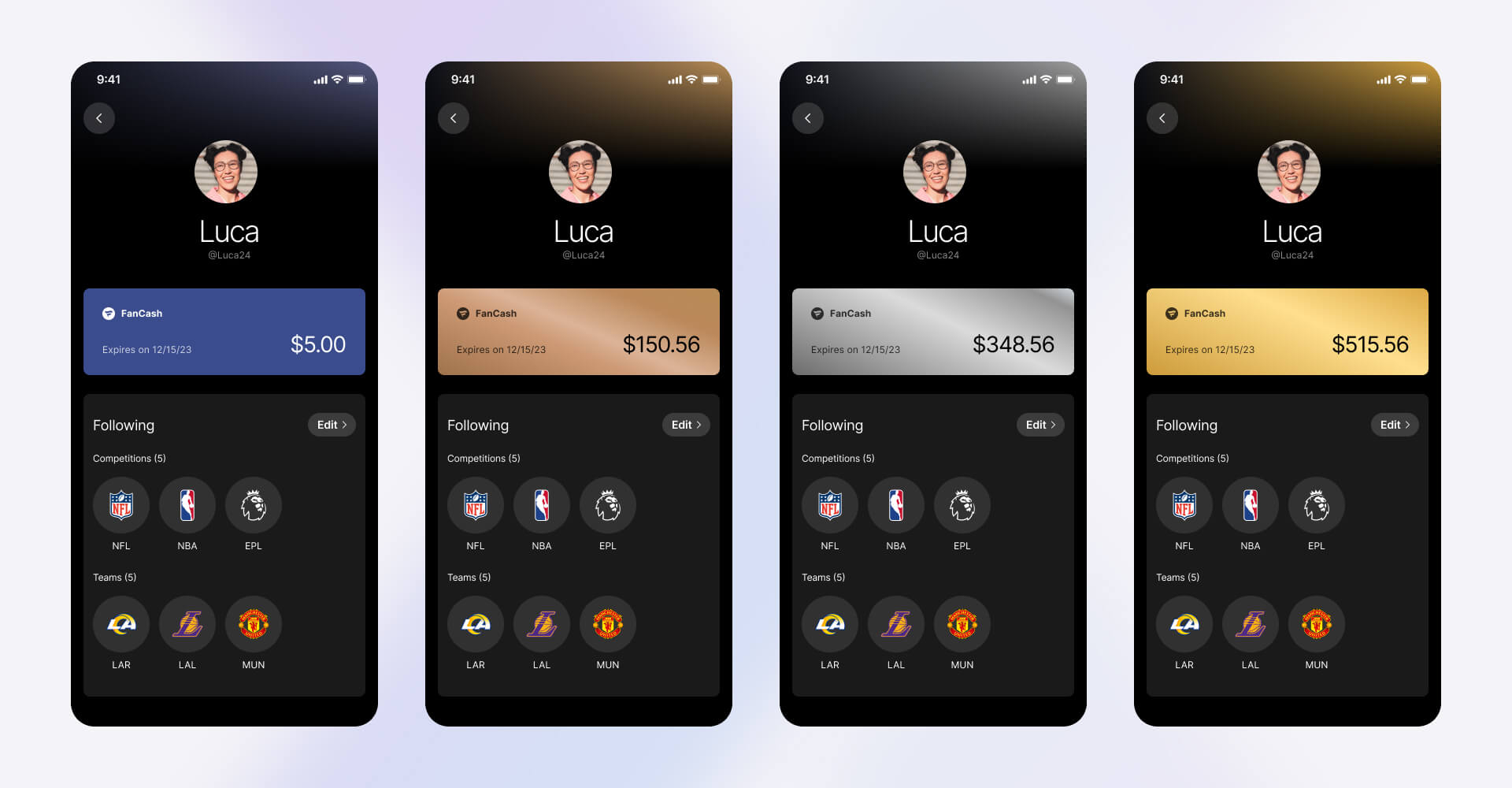
Loyalty wasn’t an afterthought but woven into the fabric of the app. I designed the user’s profile as a central hub for all loyalty activities, from tracking FanCash balance to viewing rewards status and engaging with FanChallenges.
Part 2: Visualising the Product Roadmap
Following delivery of the foundational work, our partnership expanded. I was engaged to help visualize the long-term, multi-milestone product roadmap. The goal was creating a tangible “North Star” vision to align stakeholders and guide the product’s evolution from minimum viable product to fully personalized ecosystem.
Milestone 1: The Foundation (Visualising the essential features for launch)
Milestone 2: Deepening Engagement (Designing the next wave of features)
Milestone 3: The Fully Personalised Ecosystem (Creating the “North Star” vision)
The Impact: A Complete Strategic Vision that Aligned the Business
Across these engagements, my product design work provided a complete strategic package that was instrumental in moving this complex, high-stakes initiative from abstract idea to actionable plan.
Created a Tangible Vision to Align Stakeholders: The comprehensive UX designs transformed the roadmap into a clear, tangible product vision. This “North Star” made it easier to secure executive buy-in and align product, design, and engineering teams around a single, shared understanding of the future.
Accelerated the Development Roadmap by Months: By delivering a detailed, end-to-end foundation for the mobile app, I removed ambiguity and provided clear specification for internal teams. This de-risked the engineering effort and saved months of discovery work, allowing them to move directly into efficient build phase.
Provided a Scalable Foundation for Future Growth: The design system and architecture I established created a cohesive framework. This empowered the internal team to continue building, iterating, and launching new features with speed and consistency long after my engagement.
This type of challenge sits at the core of sports product UX design, where complex systems must still feel intuitive and human.
Professional note: This case study showcases the foundational design architecture and conceptual UX/UI work I delivered. The final execution and continued iteration are handled by the client’s internal team.
Sports Product Strategy & UX Design Case Studies
Clear, outcome-focused case studies showing how I’ve helped sports brands simplify complexity, sharpen their product direction and design experiences that keep users returning.



Got a product idea or an underperforming app?
Tell me about your challenge or book a quick 20-minute conversation to get started.