

The Challenge: Create a New Hub for Fan Competition
To deepen its relationship with fans, Fanatics aimed to expand beyond commerce and betting into free-to-play predictive games. The goal was creating a new “Games” section where users could compete against each other across various sports.
The design brief outlined two primary game types:
Leagues: Building upon an existing capability to create season-long competitions
Pools: Introducing a brand-new format for event-specific predictions
The challenge was translating this high-level business brief into a tangible product concept, defining a user experience that was intuitive, visually compelling, and scalable to accommodate any sport.
This type of product definition sits at the intersection of fan engagement design and sports product UX consulting, where clarity and structure turn broad ideas into usable, scalable systems.
My Role: Product Design Consultant
My role was serving as the initial architect for the user experience. I was tasked with taking business requirements and designing the complete end-to-end conceptual model for the new Fanatics Games platform. My deliverable was a set of high-fidelity mockups intended to serve as a comprehensive visual guide for internal product and engineering teams.
The Solution: A Framework for Scalable Games
My approach was creating a flexible, repeatable UX framework that could be adapted for different sports and sponsors. This ensured a consistent user journey while allowing for unique branding of each event.
The conceptual design covered three core experiences:
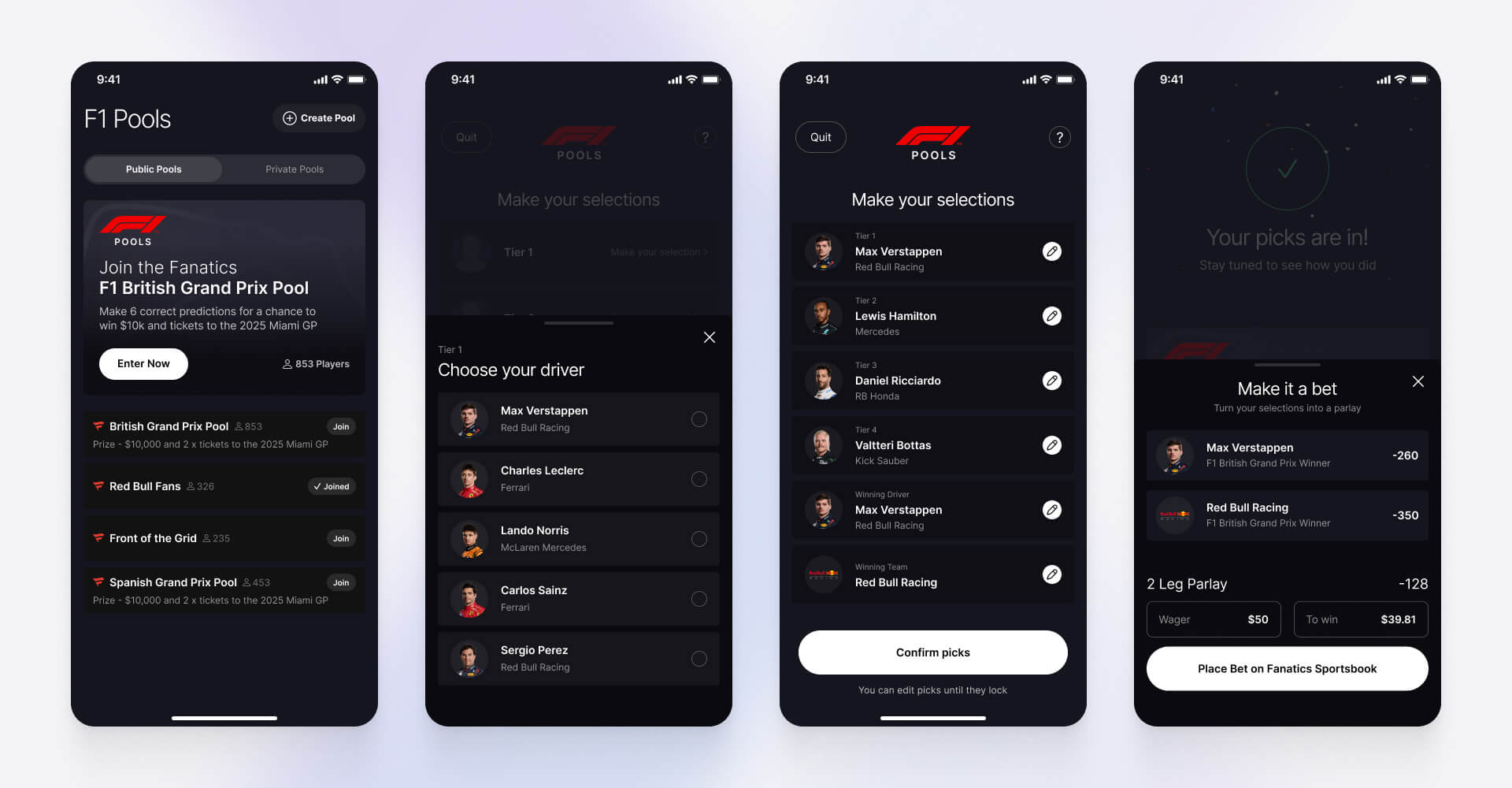
1. The ‘Pools’ Concept: A Focus on Simplicity and Speed
For event-based games like The Masters and F1, the proposed flow was designed to be fast and intuitive. The journey was broken down into simple, clear steps:
Discovery: A clean game lobby to browse public pools or create private ones.
Selection: A tier-based system for making picks, allowing for complex predictions without overwhelming the user.
Confirmation & Social Sharing: A clear “Picks are in!” screen that seamlessly transitioned to inviting friends, encouraging viral growth.
2. The ‘Leagues’ Concept: A Hub for Season-Long Engagement
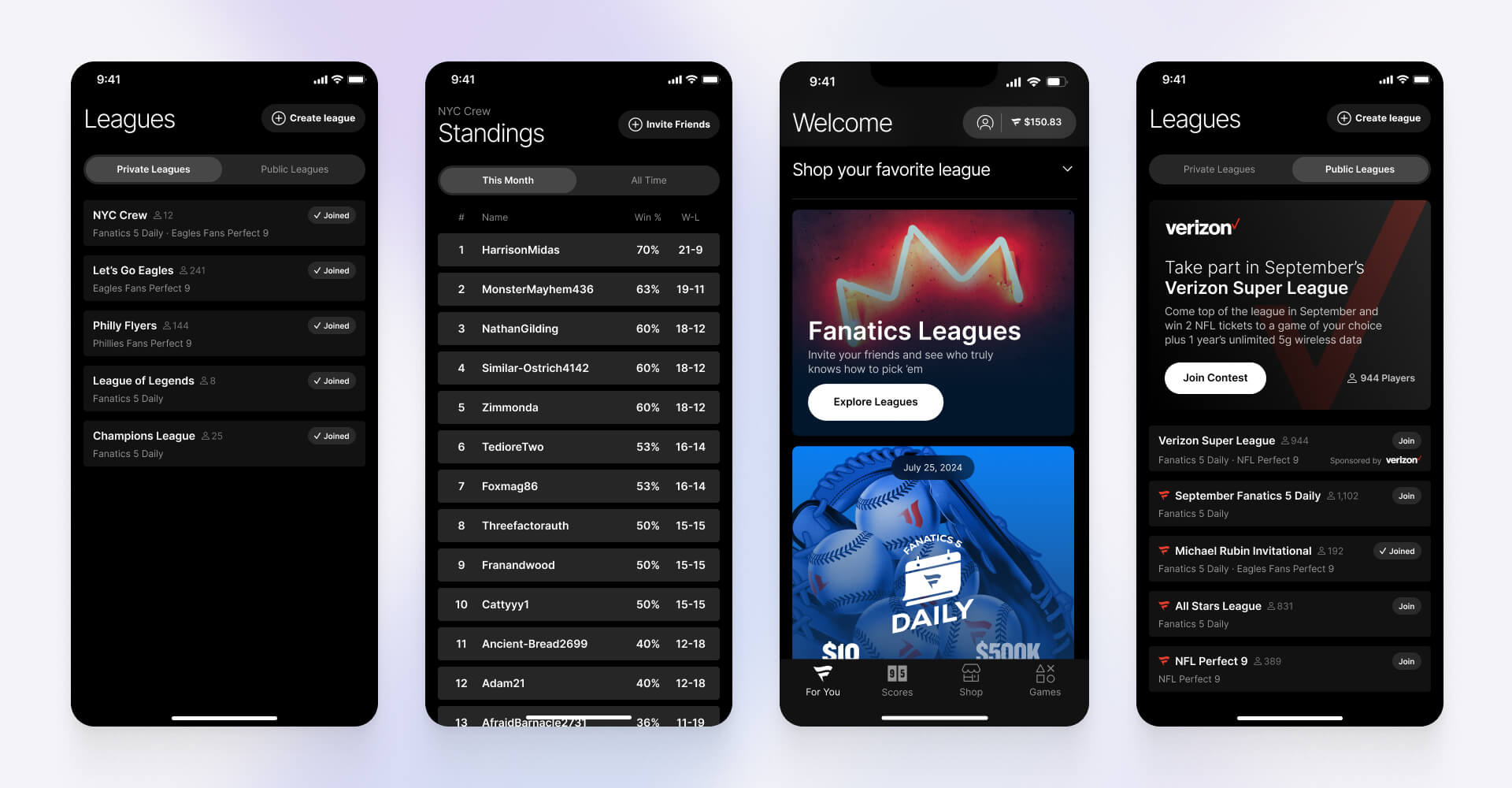
For leagues, the design focused on community and long-term tracking. The UI concept provided a central hub for users to:
Join Public and Private Leagues
View Standings: A clean, easy-to-read leaderboard to track progress over time
Integrate Sponsorship: A design that elegantly incorporated partner branding without disrupting the user experience
3. Social Competition as a Core Feature
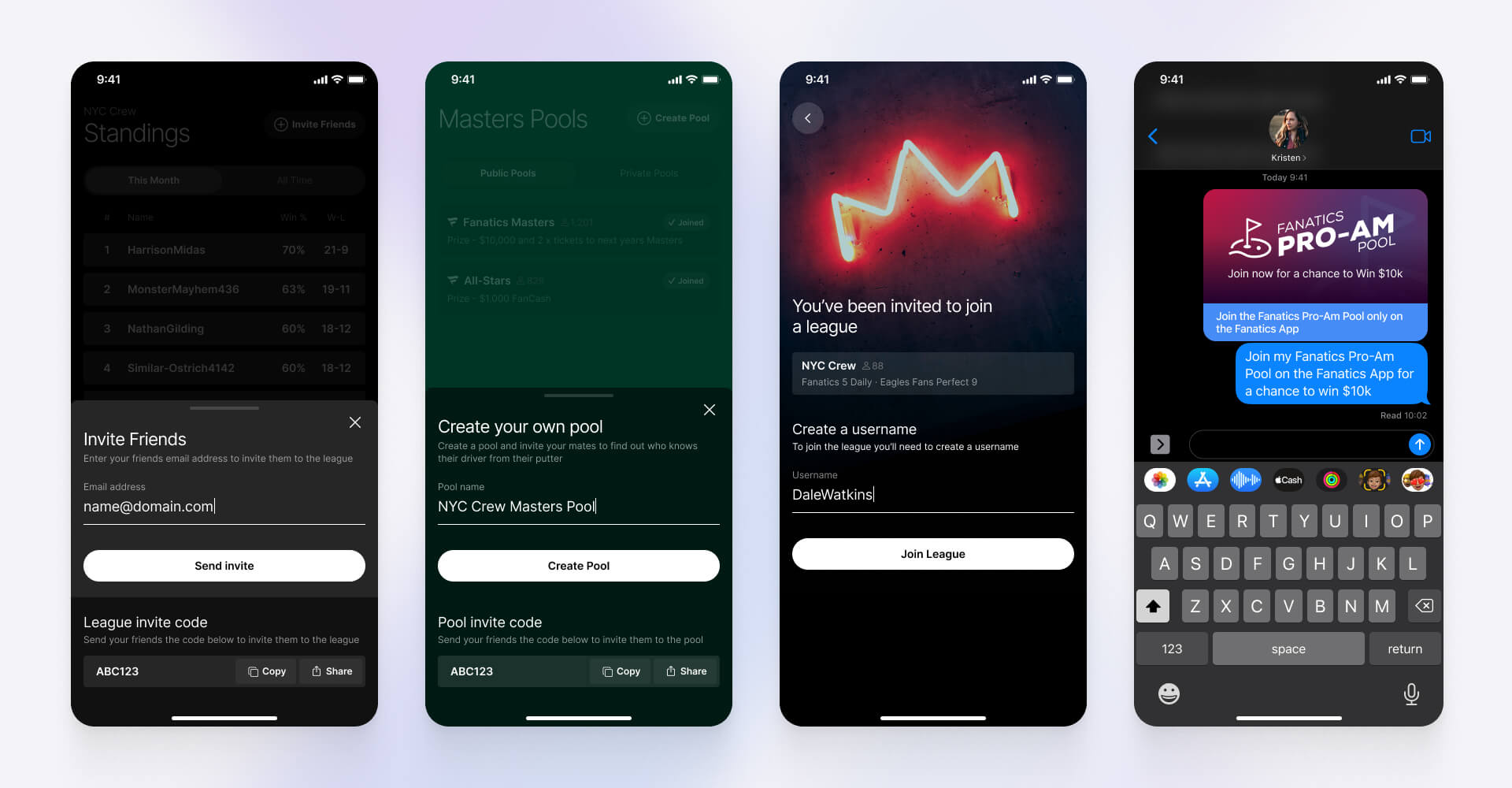
A key part of the concept was a simple, integrated flow for creating private pools and leagues, complete with an easy-to-use invite system, making it simple for users to bring their friends onto the platform.
The Impact: A Clear Vision to Accelerate Development
My final deliverable was a comprehensive conceptual design package. These mockups and user flows provided the Fanatics product and engineering teams with a clear, validated vision for the entire Games platform. This framework:
Proposed a Scalable System: The reusable UX patterns demonstrated how new games could be created for any sport with minimal design overhead.
Visualized the End-to-End User Flow: The concepts covered every screen, from discovery and onboarding to gameplay and social sharing, answering key questions before development began.
Provided a Foundation for Execution: The detailed mockups served as a powerful guide and starting point for the internal team’s final design and development sprints, de-risking the project and accelerating the path to launch for this major new platform feature.
Professional note: This case study showcases the conceptual design work and strategic thinking delivered for this project. The final, in-production designs were executed by the client’s internal team.
Sports Product Strategy & UX Design Case Studies
Clear, outcome-focused case studies showing how I’ve helped sports brands simplify complexity, sharpen their product direction and design experiences that keep users returning.



Got a product idea or an underperforming app?
Tell me about your challenge or book a quick 20-minute conversation to get started.